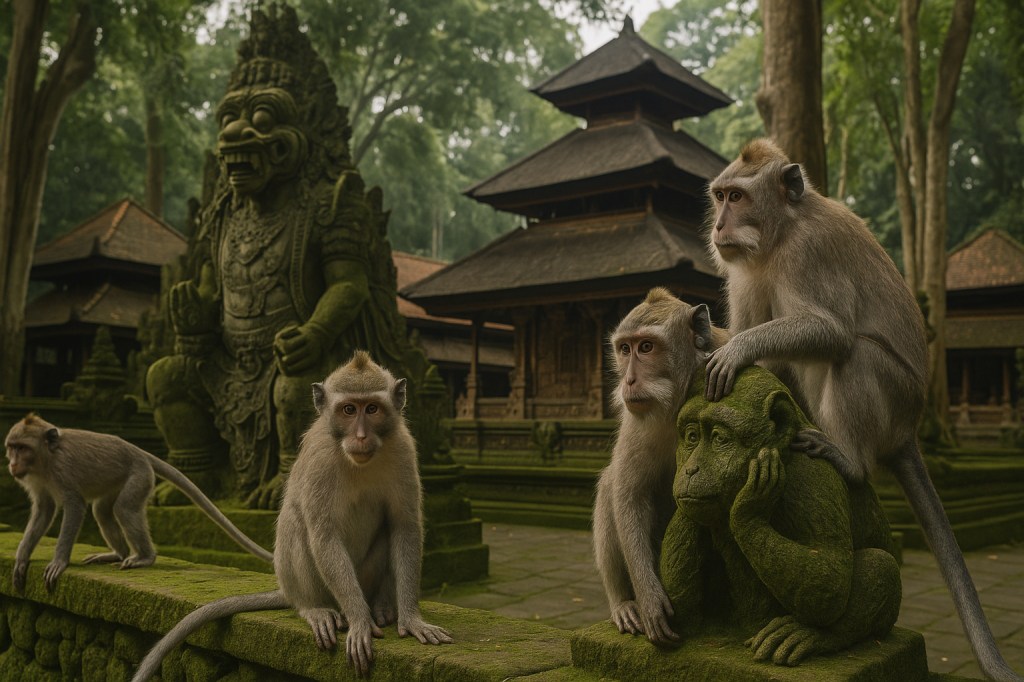
Alright, so you’ve probably seen a ton of pics or TikToks about Monkey Forest Bali and thought, “Okay, that place looks wild.” And yeah, it is—but in a good way. As a private driver in Bali for more than 12 years, I’ve taken hundreds of guests there. Some loved it, some got a little freaked out (you’ll understand why), but most walk away with a story they’ll tell over and over again. So, I thought it’s time I write this down properly.
If you’re planning a trip to Ubud, the Monkey Forest in Bali is one of those places you kinda can’t skip. It’s not just about the monkeys—although, yes, there are a ton—it’s also about culture, jungle vibes, temples, and even a bit of comedy (unintentional monkey mischief, mostly).
So, What Exactly Is the Monkey Forest Bali?
The official name is Sacred Monkey Forest Sanctuary. Locals call it “Mandala Suci Wenara Wana”—yeah, try saying that three times fast. It’s smack in the middle of Ubud, and it’s home to over 1,200 long-tailed macaques. These aren’t shy monkeys. They’re basically the landlords and you’re the guest.
Besides the monkeys, there are three temples inside the forest—Pura Dalem Agung Padangtegal, Pura Beji, and Pura Prajapati. Each one still used by locals, especially during ceremonies. So yeah, it’s not just a monkey park—it’s a legit sacred space too.
Oh, and the forest itself is stunning. Towering banyan trees, moss-covered statues, tiny rivers, and shaded trails that make you forget Ubud’s traffic is just minutes away. It’s cool (literally and figuratively), peaceful in spots, and kinda surreal.
Best Time to Visit Monkey Forest Bali
Alright, lemme be straight with you. If you go around noon, you’re just asking for heatstroke and a crowd full of phone-waving tourists. Morning is best—like 9 AM when the gates open. The monkeys are a little more chill, the light’s perfect for pics, and it’s way easier to enjoy the place.
Avoid weekends if you can. And if you’re traveling during the dry season (April to October), great—no muddy trails. But honestly, even during rainy season (Nov–March), it’s still doable. Just bring a poncho, not an umbrella (monkeys think those are toys).
Ticket Prices and Opening Hours
Prices are affordable, but they’ve gone up a bit lately. As of 2025, here’s what you’re looking at:
- Adults: IDR 80,000
- Kids (3-12 years): IDR 60,000
- Children under 3: Free
Open daily from 9 AM to 6 PM (last entry at 5 PM). Tickets can be bought on-site or online now. Honestly, get ‘em online if you hate queues. If you book me as your driver, I can help with that too, no problem.
What NOT to Do Around the Monkeys (Trust Me on This One)
I’ve seen it all. Monkeys stealing hats, yanking earrings, opening zippers—these little guys are clever. Here’s what I tell all my guests, based on things I’ve actually seen go down:
Don’t Bring Plastic Bags
They associate that crinkly sound with food. I once had a lady lose her makeup kit because it was in a mini plastic pouch. Monkey just grabbed it and dashed. Lipstick everywhere.
No Food, No Snacks
Even if you think it’s hidden—nope. They’ll sniff it out. I watched a guy once get his backpack opened by a monkey while he was busy taking a selfie. Found a protein bar. Gone.
No Loose Jewelry or Sunglasses on Head
Yes, that Bali hat looks cute. No, it won’t stay on your head. Clip-on earrings? Say goodbye.
What You Should Bring
- Small bag or fanny pack (worn on the front)
- Phone or camera with a good wrist strap
- Light clothing (it gets humid)
- Hand sanitizer (trust me, you’ll want it)
- Closed shoes – not flip-flops (there are stairs and wet areas)
And bring your patience. Sometimes you’ll get photo-perfect moments, sometimes the monkeys just don’t care. It’s nature, not a theme park.
Getting That Perfect Monkey Selfie
Yes, you want it. Everyone does. But here’s the deal—you don’t chase the monkeys. Let them come to you. Sit quietly on a bench or low step. If they’re curious, they’ll approach. Some of the forest staff will help you if they’re around, but don’t count on it.
Oh, and don’t try to feed them to get the shot. That’s not cool. It encourages aggressive behavior, and honestly, you don’t want a monkey jumping on your shoulder unexpectedly.
Also, the monkey pee is real. If one sits on you—well, good luck. It’s kinda like a rite of passage, though. Just wear something you can laugh about ruining.
Is Monkey Forest Bali Safe?
Short answer: Yeah, mostly. But it’s still a wild animal sanctuary. They might look cute, but macaques have sharp teeth and a strong grip. Don’t panic if they come close—just stay calm. Running or screaming will make it worse.
The staff are trained and super helpful. If anything weird happens (like a monkey won’t get off you), someone will assist you fast. There’s also a first aid station at the entrance.
You’re more likely to be injured from slipping on a mossy step than by a monkey bite, to be honest. So just walk carefully.
Cultural Side of Monkey Forest
Okay, this part gets overlooked by a lot of tourists. The Monkey Forest is spiritually important to Balinese Hindus. The temples are used for purification ceremonies, cremations, and offerings. You can’t enter the temple areas unless you’re participating in a ceremony, and that’s totally fair.
Take a moment to notice the stone carvings, the penjors (bamboo poles), and the little canang sari offerings on the ground. Don’t step on them. If you’re not sure what you’re seeing, ask one of the staff or guides—they’re usually happy to explain.
How to Get to Monkey Forest Bali
It’s right in Ubud town, so if you’re staying nearby, you can walk or cycle. But if you’re coming from Seminyak, Canggu, or Kuta, it’s a bit of a mission—about 1.5 to 2 hours depending on traffic.
You can hire a private driver (hey, that’s me 👋) for a day trip to Ubud. We usually combine it with visits to places like Tegallalang Rice Terrace, Tirta Empul temple, or a nice lunch overlooking the jungle. Honestly, it’s the most chill way to explore. You don’t wanna be dealing with scooter parking or getting lost in those tiny back roads.
What’s Around the Monkey Forest?
Right outside the forest gates, there’s a whole stretch of shops, warungs, and cafes. It’s touristy, yeah, but you can still find cool handmade stuff, wood carvings, silver jewelry, and those “Eat, Pray, Love” style dresses.
There’s a nice café called Habitat that my guests usually enjoy—it’s walking distance and they make a solid iced coffee. There’s also a vegan spot across the street, and a gelato place nearby if you’re just done with the heat.
Also, just wandering around that part of Ubud is fun. Side streets full of little surprises—like a hidden spa or that one gallery that sells banana leaf art.
Is It Worth It?
I get asked this all the time—“Is Monkey Forest Bali really worth visiting?” And look, if you don’t like animals, crowds, or unexpected chaos… maybe not. But if you’re up for something unique, with a mix of wildlife, culture, and lowkey jungle adventure, then yes. It’s absolutely worth a couple of hours.
Plus, it’s one of those places that’s never quite the same twice. Some days the monkeys are chill and you’ll get amazing photos. Other times, they’re in drama mode, fighting over a coconut. That unpredictability? That’s the charm.
Extra Things to Know (Stuff I’ve Learned the Hard Way)
- Don’t bring bananas. There used to be stalls selling them, but that got banned. For good reason.
- Keep your car keys zipped up. Monkeys have stolen those before. No joke.
- If you’re scared of monkeys jumping on you, just stay on the main paths. They hang out more in the deeper parts.
- Monkey bites are rare but possible. There’s a clinic in Ubud that deals with this kind of stuff. But again, don’t worry too much—just follow the rules.
- The forest gets slippery when wet. If you’re older or have mobility issues, let your driver know so we can help you plan around that.
Local Legends and Monkey Forest Stories (You Won’t Find on Google)
So here’s something you might not know: Balinese people believe that monkeys are sacred animals. Not just because of Hanuman, the monkey god in the Ramayana, but also because they’re seen as protectors of the temples inside the Monkey Forest. It’s why the locals don’t mess with them too much. We respect them—even when they’re being cheeky little punks.
One time, I had a guest from Australia who was super into spiritual stuff. She sat near one of the temple gates meditating while the rest of the group wandered. No joke—three monkeys came and sat near her, not touching, just quietly sitting like they were joining in. No food, no tricks. It was like they felt something. I still think about that.
Of course, the next day, I brought a group of lads from the UK and one monkey full-on stole a GoPro and climbed up a tree. That’s Monkey Forest for you—every visit’s a wild card.
Temples Inside Monkey Forest: What’s the Big Deal?
Okay, so you can’t actually go inside the temples unless you’re dressed in traditional attire and there’s a ceremony happening, but even just walking around them is an experience. The architecture is old-school Bali—carved stone, moss-covered steps, guardian statues with cloth wrapped around them. Gives you chills sometimes, honestly.
The main temple, Pura Dalem Agung Padangtegal, is dedicated to the god Shiva, the destroyer. Not in a bad way—more like transformation, endings before new beginnings. Locals do cremation ceremonies tied to this temple. That’s heavy stuff, but powerful.
Then there’s Pura Beji, near the small river inside the forest. It’s used for purification. You’ll see women in kebayas walking in, carrying offerings—super peaceful. Don’t walk into the sacred spring area unless you’re guided and dressed properly. It’s not a tourist pool.
And lastly, Pura Prajapati, near the cemetery, is where people come before cremation. Bit somber, but important. And yeah, that’s one of the reasons why Monkey Forest isn’t just a place with animals—it’s alive with meaning and rituals. That’s why we respect it so much.
What Else to Do Around Ubud After Monkey Forest
If you’re already in Ubud, don’t stop at just the forest. This area’s got so much packed into it, and honestly, most people only scratch the surface. Here’s what I usually suggest when I’m driving folks around who want to do more than just “check in” at Monkey Forest.
Grab Lunch in a Jungle Cafe
There’s this spot called Clear Café not too far, perfect if you’re into healthy eats. Or if you want a jungle view, Sayan House is a bit of a splurge but wow, that view… it’s insane. If you want something more casual and local, I’ll take you to Warung Biah Biah—my regular lunch stop. Tasty nasi campur, cold drink, under IDR 50K.
Try a Real Balinese Massage
You’d be surprised how many people say their massage at a small Ubud spa was the highlight of their trip. There’s one just behind the soccer field near Monkey Forest Road. Ask me, and I’ll show you. Not on Google Maps, but the real deal.
Visit an Art Studio
Most people just pass the galleries, but you can actually walk into places like Agung Rai Museum of Art (ARMA) and sometimes meet the artists. They’re chill and love chatting with curious travelers. You might even end up with a painting in your suitcase.
Common Mistakes Tourists Make at Monkey Forest Bali
Let’s keep it real. Sometimes I have to shake my head when I see folks ignoring the signs, not listening to guides, or worse—trying to touch or pick up baby monkeys. Don’t be that person. So here’s a few heads-ups that’ll help you avoid looking like a clueless tourist.
- Feeding the monkeys: Not allowed. It messes up their natural diet and behavior. Just don’t do it, even if someone “offers” you fruit to give them. Say no.
- Getting too close to babies: Mama monkeys don’t play. You go near a baby, she might hiss or jump at you. Even if the baby seems alone—it’s not.
- Wearing open-back sandals: Those steps can be slippery. If it rains even a little, it turns into a skating rink.
- Bringing drones: You need a special permit, and 9 times outta 10 you won’t get it. Plus, it freaks the animals out.
- Thinking it’s a zoo: This one’s huge. Monkey Forest isn’t a zoo. The monkeys aren’t trained, there’s no fence, and you gotta respect that you’re on their turf.
How Long Should You Spend There?
Most people take 1.5 to 2 hours to walk through, take photos, and soak in the vibe. But some of my guests have spent almost 4 hours—especially if they take their time, rest at a few benches, and enjoy some monkey-watching like it’s Netflix.
It really depends on your energy level and how into nature you are. Some people get a little anxious with so many monkeys around. Others are like “this is the best part of Bali.” Both are fair. You can leave anytime and re-enter the same day if you keep your ticket.
If You’re Planning a Ubud Day Trip…
This is my usual go-to itinerary for a day trip from Seminyak or Canggu that includes the Monkey Forest:
- Start early (pick-up around 7:30–8:00 AM)
- Stop at Tegenungan Waterfall on the way in
- Head to Monkey Forest around 9:30 AM
- Coffee break at a local warung or at Seniman Coffee Studio
- Quick walk around Ubud Palace and Market
- Visit Tegalalang Rice Terraces in the afternoon
- Optional swing stop or luwak coffee plantation
- Back to your hotel before sunset
It’s full, but you won’t feel rushed. Trust me—I’ve done this loop hundreds of times. It works.
Staying Near Monkey Forest? Here’s What to Expect
If you stay in one of the hotels or villas near Monkey Forest Road or Jalan Hanoman, you’re basically in Ubud’s heart. Everything’s walkable: cafes, yoga studios, shops, spas.
But there’s a flip side: mornings can be noisy (roosters, scooters, random gamelan rehearsals), and the monkeys sometimes do wander out. I’ve heard of monkeys sneaking into villas and stealing soap or snacks from the minibar. Keep your windows shut when you go out. For real.
If you want something quieter, I usually recommend staying slightly outside Ubud center—like in Nyuh Kuning or Penestanan. Still close, but with more rice fields and peace.
Booking Tickets and Tours
So a lot of folks ask me, “Should I book in advance or just show up?” My answer: it depends. For Monkey Forest specifically, tickets are easy to get—even walk-in. But during high season (July–Sept), Ubud can get packed. If you’re short on time or want to avoid standing in line in the heat, just book online or ask your driver (me 😄).
Also, if you’re planning to combine this with other tours (like a Mount Batur sunrise or Bali swing), best to pre-book. The combo packages often save you money and stress.
 Bali News
Leave a comment